From the Podlo desk Recording
The quietest corner of your house
By Podlo DeskRead time: 5 minutesGoes with: Episodes
Good sound at home is mostly about the room and very little about the price of the microphone. A hard, empty room makes any voice ring and echo. A small space full of soft things makes a basic microphone sound warm and close. Before you buy anything, walk through your home, clap once in each room and listen. Then build your recording corner out of cupboards, curtains and blankets.
Clap and listen. Stand in each room and clap once. If you hear the clap ring on after your hands have met, that ring will sit behind every word you record. Tiled rooms with bare walls are the worst. A bedroom with a mattress, curtains and a full cupboard is usually the best room in an Indian home.
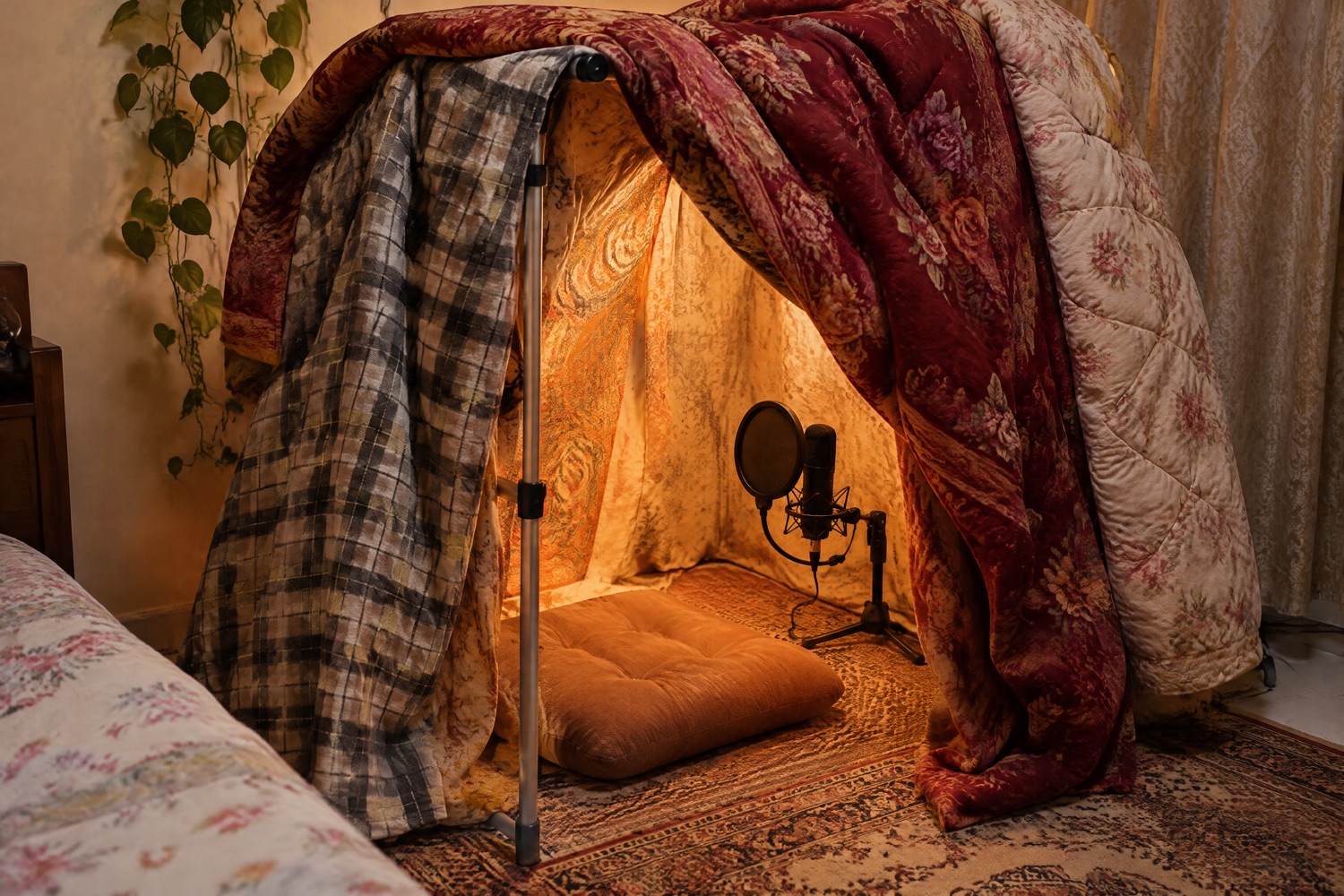
Soft things near your mouth. Sound bounces off hard surfaces close to you. Sit facing an open cupboard full of clothes, or hang a thick razai behind the microphone. Many home podcasters record under a blanket draped over a clothes stand. It looks odd and it works. You are not trying to silence the room. You are trying to stop your own voice coming back at you from the wall.
Choose your hour. Pressure cooker whistles, traffic, the neighbour's television and the ceiling fan are all louder on a recording than they seem in life. Find the quiet hour of your house, often early morning or late at night, and make it your fixed recording time. Switch off the fan for the take if you can bear it, and keep the fridge door shut.
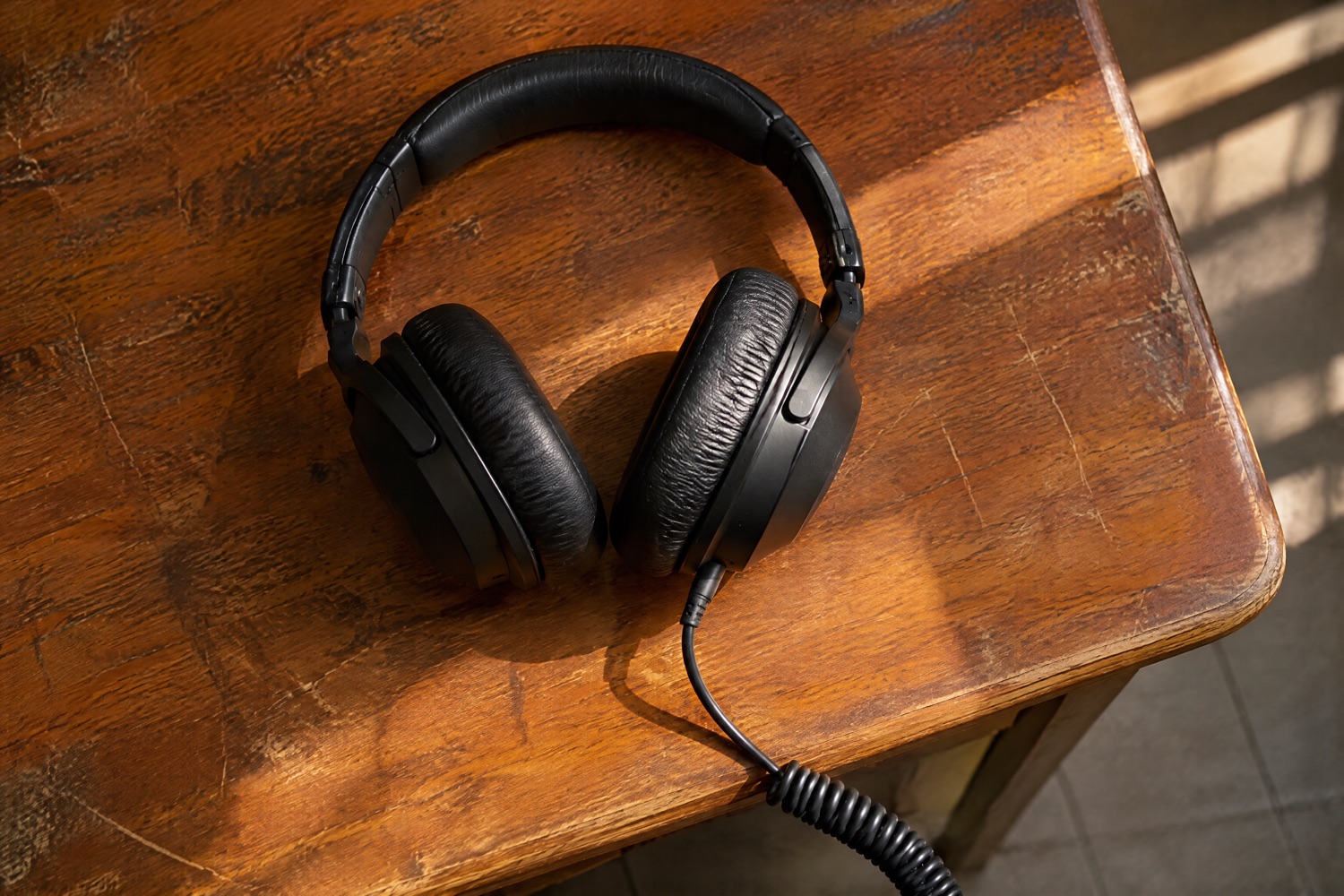
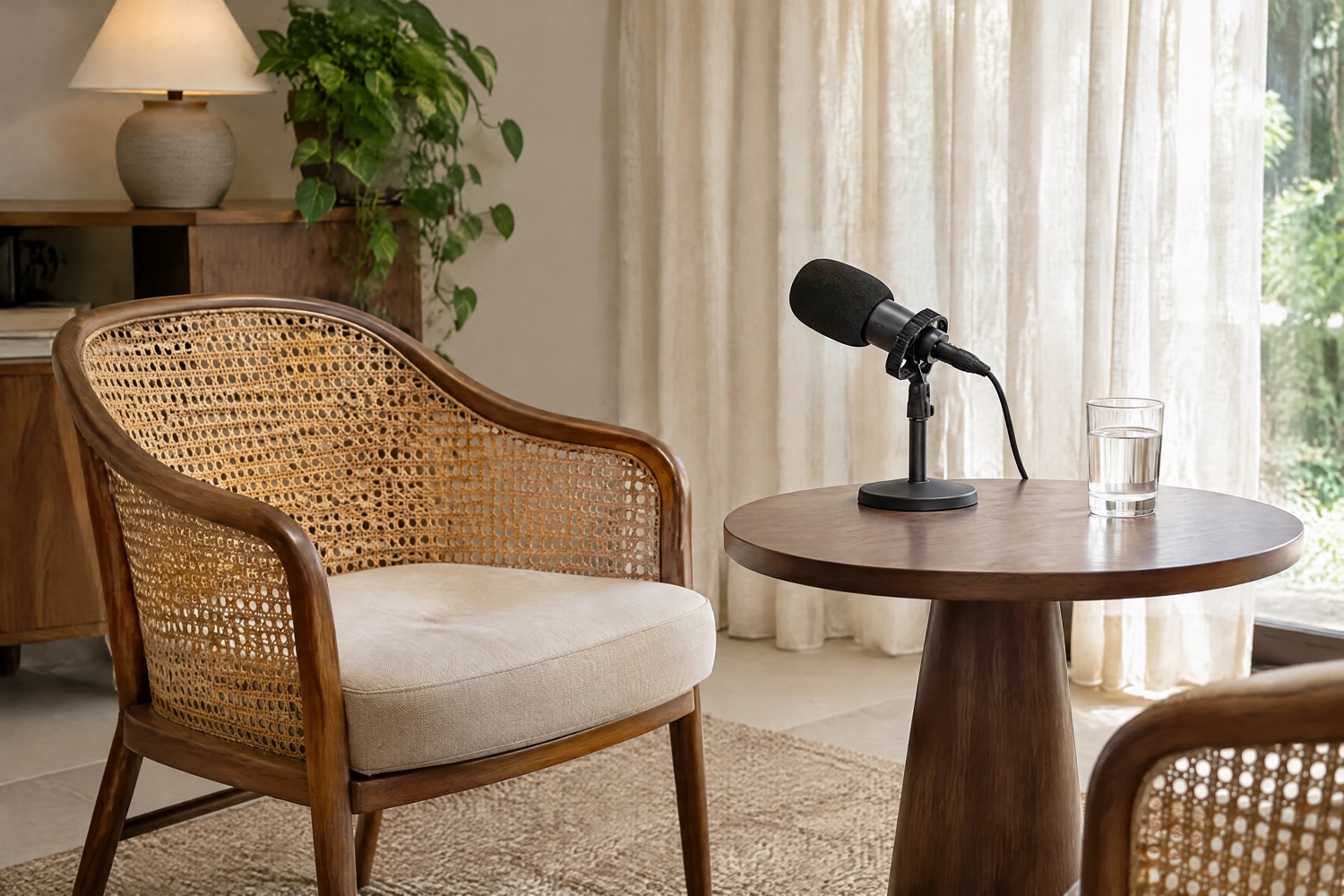
A basic microphone, used well. A simple USB microphone that plugs into a laptop or phone is enough to begin. Keep it a hand's width from your mouth, slightly to one side so that your breath does not hit it, and at the same distance for the whole episode. Wear headphones while you record, so that you hear the hum or the scooter outside before your listeners do. Record ten seconds of silence first. Editors call this room tone. Those seconds of your room's own quiet are useful later for covering a cut. When the take is done, set the episode in Podlo to Editing, so that the Today screen shows honestly what is still in the making.
More from the Podlo desk.